
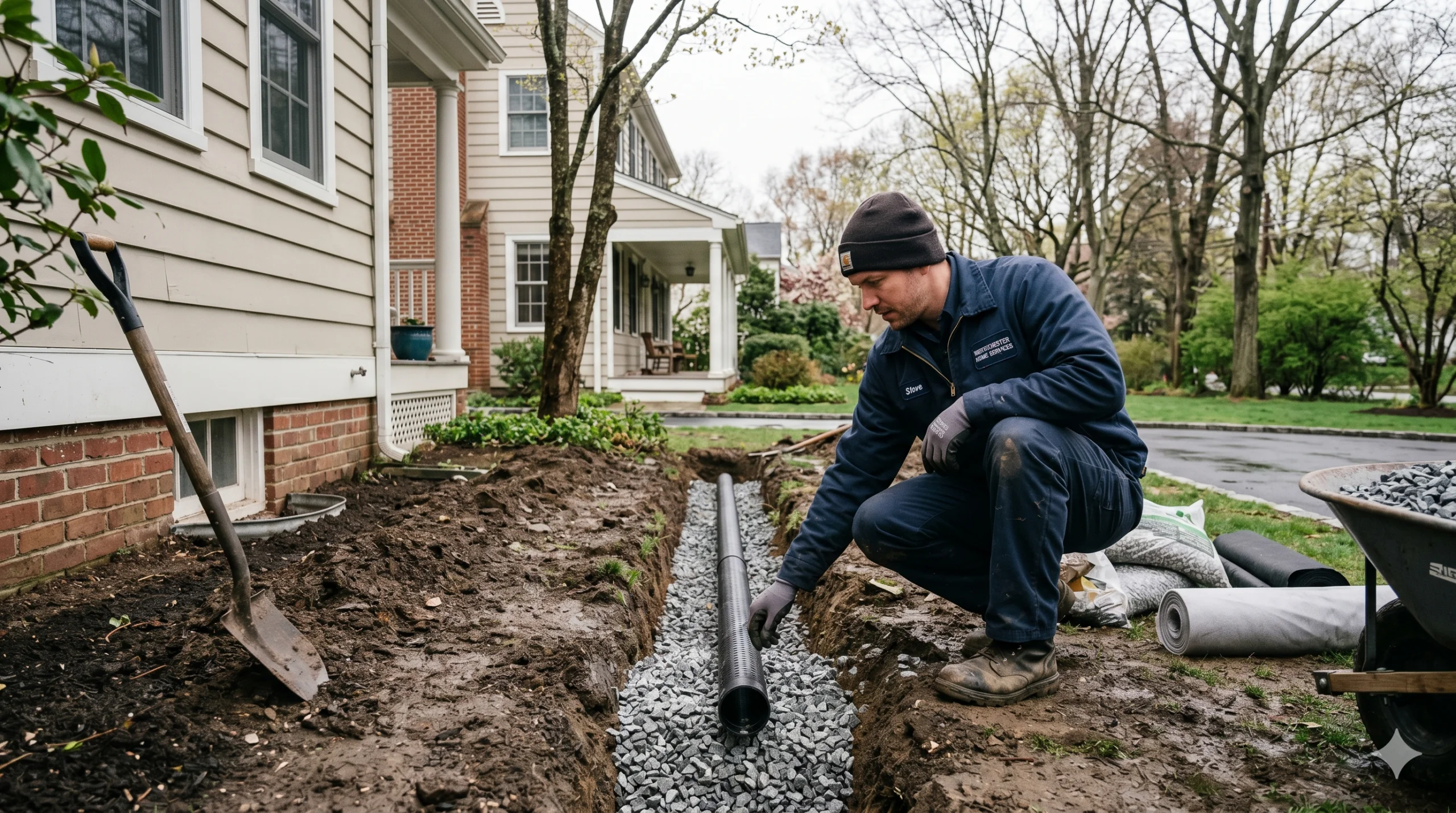

Bruni & Campisi, Inc. has helped homeowners across Westchester protect their properties since 1979, and drainage is one of those issues that often starts small before it turns expensive. A damp basement wall, soggy lawn, or water pooling near the foundation may look like a nuisance at first. In reality, it can point to a larger runoff problem that keeps putting stress on your home after every heavy rain or spring thaw.
In Westchester County, drainage work is rarely one-size-fits-all. Many homes sit on sloped lots, older neighborhoods often have mature landscaping that changes water flow, and hard rain can move downhill quickly toward patios, walkways, garages, and foundations. A properly designed French drain can redirect that water before it creates rot, mold, erosion, or interior moisture damage.
What homeowners need to know about French drains
A French drain is a gravel-filled trench that usually contains a perforated pipe. Its job is to collect water from saturated soil or surface runoff and move it away from the area where it is causing trouble. Depending on the property, the drain may discharge to a dry well, daylight on a lower grade, or connect to another approved drainage solution.
French drains are often used when homeowners notice:
· Water collecting along the foundation
· A lawn that stays muddy for days after rain
· Basement seepage or damp crawlspaces
· Erosion near walkways, retaining walls, or driveways
· Downspouts that dump water too close to the house
A French drain is not just a trench with stone tossed into it. For the system to last, the pitch, pipe depth, filter fabric, discharge point, and surrounding soil conditions all matter. That is why homeowners often get better long-term results when the system is designed around the property instead of copied from a generic online diagram.
Why does French drain installation matter in Westchester?
Westchester homes deal with a little of everything: wet spring weather, summer downpours, falling leaves that clog existing drainage paths, and winter freeze-thaw cycles that can worsen grading problems. On older properties, you may also be dealing with additions, patios, sheds, or reworked landscaping that changed how water moves compared with the original lot design.
That local context matters. A drainage system that works on a flat suburban lot may not be the right answer for a house in a hilly area of northern Westchester or on a compact site with limited discharge options. Good drainage work has to respect the land, the house, and the surrounding hardscape.
Common problems people face with yard and foundation drainage
Many homeowners wait until they see water inside before they act. By then, the damage may already involve flooring, finished basement materials, stored belongings, or air quality issues tied to moisture. Even if water never reaches the basement floor, repeated saturation around the home can affect landscaping, retaining walls, and exterior surfaces.
A familiar example is the homeowner who notices one corner of the yard always feels soft. Then the mulch begins washing away. Then a basement wall develops staining or a musty odor. The water was telling the story the whole time. The challenge is that drainage issues tend to develop gradually, so people get used to them until one major storm exposes the real scope of the problem.
How is a French drain typically installed?
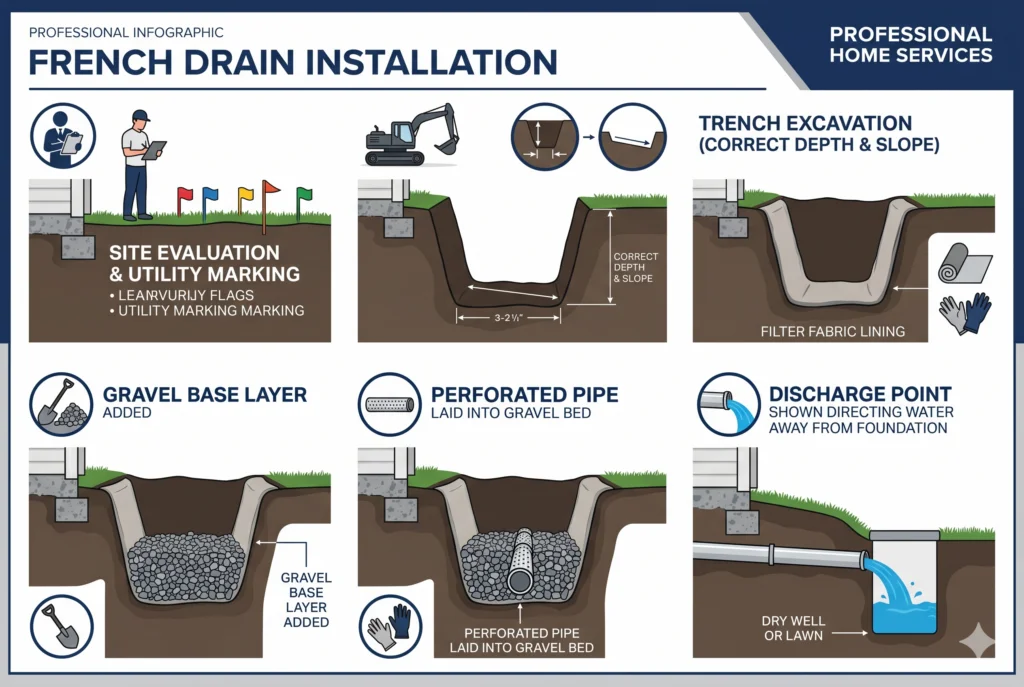
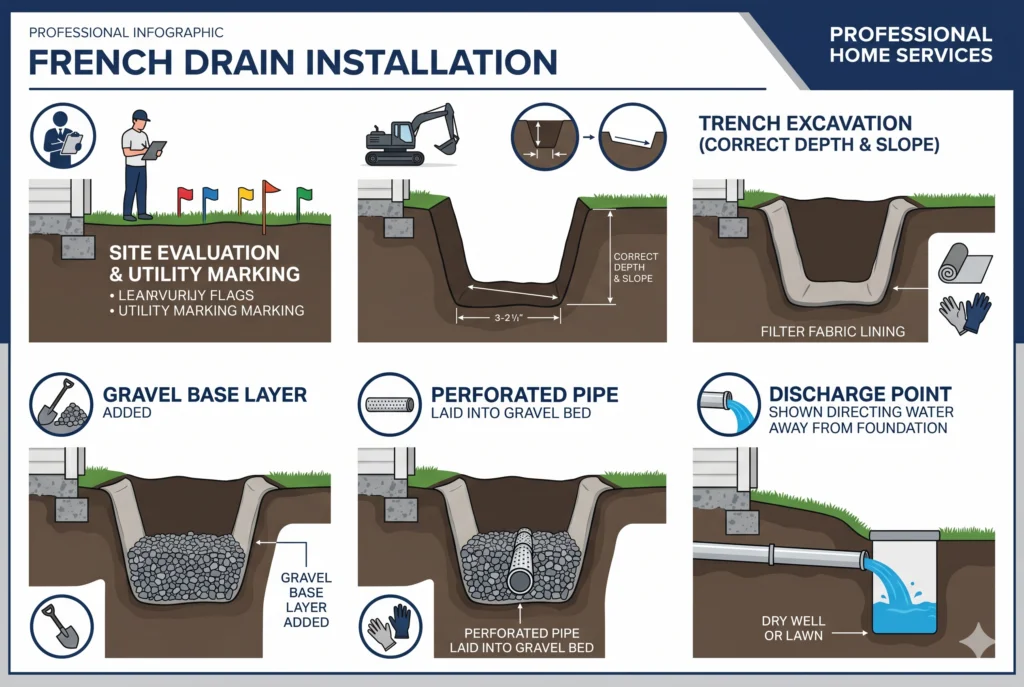
Every property is different, but the process usually includes:
1. Evaluating where the water comes from and where it can go safely
2. Marking utilities and planning the trench path
3. Excavating to the correct depth and slope
4. Installing filter fabric, gravel, and perforated piping
5. Creating an appropriate discharge point
6. Restoring the yard or affected surfaces as cleanly as possible
This is one reason professional installation matters. A drain that is too shallow, too flat, or poorly discharged may collect debris, back up, or simply move water to another part of the property where it becomes tomorrow’s problem.
How do you know when you need professional help with drainage?
Call for an evaluation when you see repeat problems, not just after a major storm. Signs include:
· Basement dampness that returns after rain
· Water stains on lower foundation walls
· Standing water near stoops, patios, or window wells
· Soil washing away from beds or hardscapes
· Gutters and downspouts that seem to work, but the yard still floods
Drainage is also worth reviewing before larger home upgrades. If you are planning a finished basement, generator pad, new condenser, patio, or landscape redesign, it makes sense to solve water movement first.
Why homeowners choose Bruni & Campisi for drainage-related work
Bruni & Campisi, Inc. is known throughout Westchester, Putnam, Rockland, and Fairfield County for responsive home service and thoughtful workmanship. Homeowners appreciate having a trusted company that understands older infrastructure, changing site conditions, and the importance of doing the job in a way that supports the rest of the home.
That broader home-comfort perspective matters. Drainage can affect air quality, finished living areas, electrical equipment, water entry points, and even how often a sump pump cycles. When you have one team that understands plumbing, electrical, and the systems that keep a home functioning safely, the conversation tends to be more practical and more complete.
Ready to protect your property from water damage? Contact Bruni & Campisi, Inc. today to schedule an evaluation.
Frequently Asked Questions About French Drains
Do French drains help basements stay dry?
They often do, especially when outside water is collecting near the foundation. The right solution depends on whether the moisture is coming from surface runoff, groundwater, grading issues, or a combination of factors.
How long does a French drain last?
A properly installed system can perform for many years, but lifespan depends on soil conditions, debris load, root intrusion, and whether the pipe and fabric were installed correctly.
Can a French drain work with other drainage systems?
Yes. Many properties benefit from a combination of solutions, such as downspout extensions, regrading, sump systems, channel drains, or a dry well.
Will installation tear up my yard?
Any excavation affects the area being worked on, but careful planning and restoration can reduce disruption. The goal is to solve the water problem without creating a new landscaping headache.
Need fast help with water issues around your home? Contact the Bruni & Campisi team to schedule your service.
For over 40 years, Bruni & Campisi has delivered dependable service to communities across New York and Connecticut. If your yard stays wet, your basement smells damp, or runoff keeps showing up in the same place, now is the right time to deal with it before the next storm makes things worse. Stay comfortable and protected year-round, book your appointment with Bruni & Campisi today.

MEMBERSHIPS
Bruni & Campisi offers a complete maintenance program for all your needs.
VIEW MEMBERSHIPSWhat Our Customers Say About Us
Glen visited today to correct water flow to the expansion tank of the hot water heater. He is very professional and gave a clear and concise description of what was changed and corrected. I would definitely recommend his work to my neighbors and friends!
Show More
mary pumillo
Glen fixed an issue that three other plumbers couldn’t resolve! He was friendly, professional, and saved me money by getting to the root of the problem. I’m so grateful to have found him and highly recommend him to anyone looking for a knowledgeable, reliable plumber.
Show More
Jelena Richard
I had Bruni and Campese replace all the Angle stops for my facets and toilets. The next day there was a problem with a few of the facets. They sent out Glenn who not only fixed the problem facets but cleaned out the sediment in all the other facets to make sure they would work well. Glenn is very experienced, personable and nice. He is the best. I would recommend asking for him.
Show More
Andy Cohen
Fiona from Bruni and Campisi visited our home to conduct a plumbing inspection and was an incredibly polite, pleasant, and educated technician. She was mindful and respectful of our home as she conducted her checks and did an excellent job of explaining what she was testing for throughout her visit. She relayed results in real time and took the time to thoughtfully answer our questions and offered practical and realistic solutions to items that needed attention. Fiona was prompt, knowledgeable, and efficient and we are looking forward to working with her on continued maintenance of our home.
Show More
Catherine Moreno
Fiona inspected our plumbing. She was very thorough and efficient.
Show More
Linda Meltzner
Fiona O’Dwyer came by today for a plumbing inspection and was incredibly knowledgeable and professional. She explained every issue in the house clearly and thoroughly, and even provided us with three different quotes. Overall, it was a fantastic experience working with her.
Show More
Claudia Vargas
Glen did a great job fixing the issue with my toilet and explaining routine maintenance that I should be doing over time to prevent further breakdown
Show More
Jordan Adelman
After recently moving into a new home I had an unexpected and strange issue with my kitchen sink and the connected dishwasher. I contacted Bruni and Campisi . Glen Gentle, a seasoned Plumber was sent soon after. Glen is a friendly, and a super knowledgeable Plumber at Bruni and Campisi. He was able to determine my kitchen drain issue right away. Glen pointed out the problems and thoroughly explained everything to me and how it could easily be corrected. He was fast professional and focused. The project was finished recently and I couldn’t be any happier with my updated kitchen sick repairs. This was my first time using Bruni and Campisi. I learned they can help me with a variety of other home repairs and issues I will desperately need. I will definitely call them again as well as recommend them to my neighbors and friends. Thank you Glen Gentle and Bruni and Campisi.
Show More
Amy Huelsman (Amy Huelsman)
Sérgio was a very talented and knowledgeable professional. He was the first one able to solve our issues with a very clogged bathtub. We have tried every thing, including calling some other companies, but Sergio from Bruno & Campisi was the only one with the patience, professionalism and willingness to try different approaches until he finally solved the problem. We are extremely grateful for his service and will certainly call him again if we need help with anything related to plumbing in our place. Thank you so much!
Show More
Ana Turkienicz
Manny came to my home to find a leak in my gas pipe. He found it within the first 10 minutes and had the pipe apart and back together in no time! While working he explained everything he was doing and why. He was incredibly professional the whole time. He is invited back any time!
Show More
Andrew Ricci
Hunter came out today after we had a sewer backup. He was very knowledgeable, thorough, and professional. He explained every step of the process and showed us what he was seeing on his camera. I would highly recommend them and will definitely be using their services in the future!
Show More
Matthew Lubera
This was my first time using the company, and I had a great experience with Glen. He came out to clear a badly clogged kitchen sink and was incredibly professional, knowledgeable, and thorough. He took the time to make sure everything was completely cleared and working properly, and he was extremely clean and careful throughout the process. What I especially appreciated was that Glen went above and beyond the actual repair — he even took the time to clean out the debris underneath my sink before he left, which I certainly wasn’t expecting! He was friendly, respectful of my home, and clearly takes pride in his work. I would absolutely request Glen again and highly recommend him to anyone needing a plumber.
Show More
Jessica Wren
Was really happy with the plumbing inspection that John performed today. He was thorough and explained everything in detail. He took the time to find the best product for my house and explained the installation process.
Show More
monica hashimoto
Double header! First, John gave my home a top-notch thorough plumbing inspection and found some problems plumbers never unearthed over the last 20 years that were the root of other problems. Great job. Then Daniel B. and D'Vante cleaned the ducts and were a great team, making sure they got to ever nook and cranny. High five!
Show More
Jane O'Reilly
Second visit from Bruni & Campisi after the water heater broke down. Jason Rees was phenomenal: he explained very well what happened with the heater, he drained it completely so it wouldn’t leaked anymore (which kept happening after water was shut off), contacted the manufacturer since the heater was under warranty, and soon we should be getting the new one installed. Thanks a lot Jason!
Show More
Augusto Gallipoli